
NAPCO Refinisher

Beyond Surface Repairs: When a Tub Needs an Inlay Instead of a Coating

You’ve probably faced this scenario: a tub appears repairable, prep begins, the coating goes on smoothly, and the result looks great at first.
Months later, the call comes in because the problem returned. The coating did its job, but the underlying condition was never addressed.
Professional judgment is what separates a quick fix from a lasting result.
Inlays aren’t a replacement for coatings; they’re part of the decision-making process. Recognizing when a project needs more than surface refinishing protects the final result, strengthens your reputation, and supports healthier margins.
👉 Want to strengthen your evaluation skills and reduce costly callbacks? NAPCO offers training and support designed specifically for professional refinishers. Contact us to learn more about tools and systems that help you make the right call before the job begins.
Cosmetic Wear and Structural Damage Are Different Conversations
Many tubs respond well to proper prep and a quality coating.
Surface staining, minor chips, and light wear typically fall into that category. The finish looks refreshed, the client is happy, and the job performs as expected.
Problems arise when the damage goes deeper than appearance. Cracks that flex under pressure, weak areas in the base, or repeated failures from earlier repairs indicate instability below the surface. A coating may improve the look temporarily, but it can’t correct movement or compromised structure.
Experienced refinishers take time during evaluation to understand what they’re working with. The goal is not only to improve appearance but to deliver durability that holds up under daily use.
Indicators That Point Toward an Inlay
Field decisions come down to assessing risk before the work begins.
Certain conditions tend to signal that coatings alone may not deliver the right outcome:
- ♦ Flexing or softness in the tub floor
- ♦ Spider cracks or recurring fracture lines
- ♦ Previous patch repairs that have broken down
- ♦ Damage concentrated in high-use or weight-bearing areas
- ♦ Wear patterns that suggest deeper material deterioration
Seeing these signs changes the conversation. Instead of asking whether the surface can be coated, professionals evaluate which solution gives the client the strongest long-term result.
👉 Need reliable repair materials when deeper damage appears? NAPCO provides professional refinishing products designed to support both structural repair and topcoat performance. Explore the solutions trusted by refinishers nationwide.
How Experienced Pros Think About Risk
Strong refinishing businesses think beyond installation day.
They consider how the surface will perform after months of use, how likely a callback becomes, and how the finished product reflects on their brand.
An inlay creates stability before the coating is applied, giving the surface a stronger foundation. That added support reduces the chance of cracking or movement and helps the finish perform as intended. Fewer callbacks protect profitability and allow teams to focus on new projects rather than revisiting old ones.
Clients may not know the technical differences between repair options, but they recognize thoughtful recommendations backed by experience.
Expertise Shows in the Recommendation
The strongest refinishing professionals evaluate conditions, explain options, and recommend solutions that match the reality of the job.
Suggesting an inlay when conditions call for it demonstrates confidence and technical knowledge, which builds trust with property owners and managers.
Great results come from choosing the right approach for each situation. Sometimes a coating is the perfect answer. Other times, the smartest decision starts below the surface.
An inlay is not an upsell. Instead, it’s a professional choice that supports durability, protects the finish, and reflects how experienced refinishers think in the field.
Frequently Asked Questions
Tub Inlays vs Coatings in Professional Refinishing
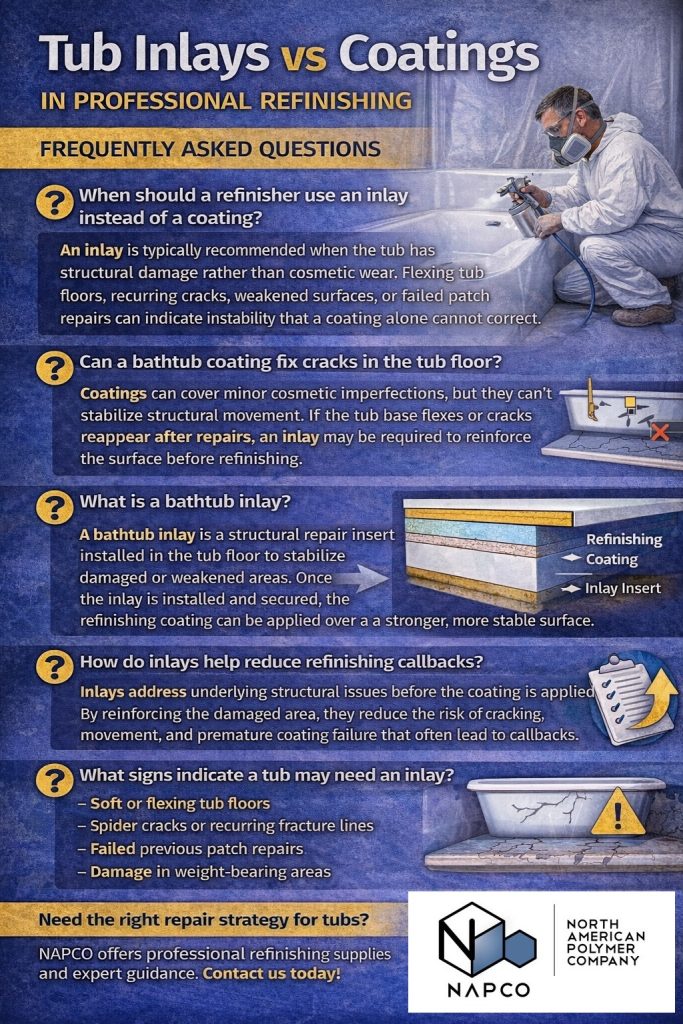
When should a refinisher use an inlay instead of a coating?
An inlay is typically recommended when the tub has structural damage rather than cosmetic wear. Flexing tub floors, recurring cracks, weakened surfaces, or failed patch repairs can indicate instability that a coating alone cannot correct.
Can a bathtub coating fix cracks in the tub floor?
Coatings can cover minor cosmetic imperfections, but they cannot stabilize structural movement. If the tub base flexes or cracks reappear after repairs, an inlay may be required to reinforce the surface before refinishing.
What is a bathtub inlay?
A bathtub inlay is a structural repair insert installed in the tub floor to stabilize damaged or weakened areas. Once the inlay is installed and secured, the refinishing coating can be applied over a stronger, more stable surface.
How do inlays help reduce refinishing callbacks?
Inlays address underlying structural issues before the coating is applied. By reinforcing the damaged area, they reduce the risk of cracking, movement, and premature coating failure that often leads to callbacks.
What signs indicate a tub may need an inlay?
Common indicators include:
- ♦ Soft or flexing tub floors
- ♦ Spider cracks or recurring fracture lines
- ♦ Failed previous patch repairs
- ♦ Damage in weight-bearing areas
- ♦ Deep wear patterns that suggest material deterioration
These signs often point to structural weakness rather than surface damage.
Do inlays replace refinishing coatings?
No. Inlays and coatings work together. The inlay stabilizes the damaged area, while the coating restores appearance and provides a durable finish.
How do professional refinishers evaluate whether a tub needs an inlay?
Experienced refinishers assess the tub for movement, structural integrity, and previous repair history. The goal is to determine whether the damage is cosmetic or structural before recommending the most durable solution.
Ready to Strengthen Your Refinishing Strategy?
Whether you're evaluating surface repairs, learning when to recommend an inlay, or looking to reduce costly callbacks, the right materials and training make a difference.
📞 Contact NAPCO today to learn how the right repair strategy can reduce callbacks, strengthen outcomes, and help you recommend the best solution on every job: 1-800-888-1081.
👉 Explore NAPCO’s professional refinishing products and training programs designed to support refinishers at every stage of the job.