NAPCO Refinisher

Refinishing vs Replacement: Helping Customers Understand the Value
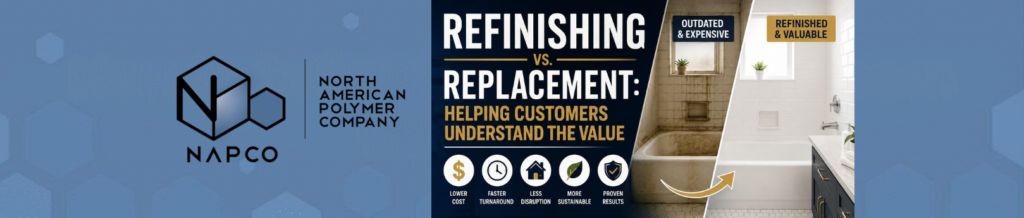
Customers don't always know whether refinishing or replacement is the better choice. They may look at an old tub, worn countertop, faded tile, or dated shower surround and assume replacement is the only real solution.
For professional refinishers, that creates an opportunity.
The goal isn’t to pressure customers into refinishing, but to help them understand what they are actually comparing. In many cases, the decision isn’t simply refinishing versus replacement. It’s cost, timeline, disruption, sustainability, and whether the existing surface still has years of useful life left.
The best refinishers know how to explain that value clearly.
Key Takeaways
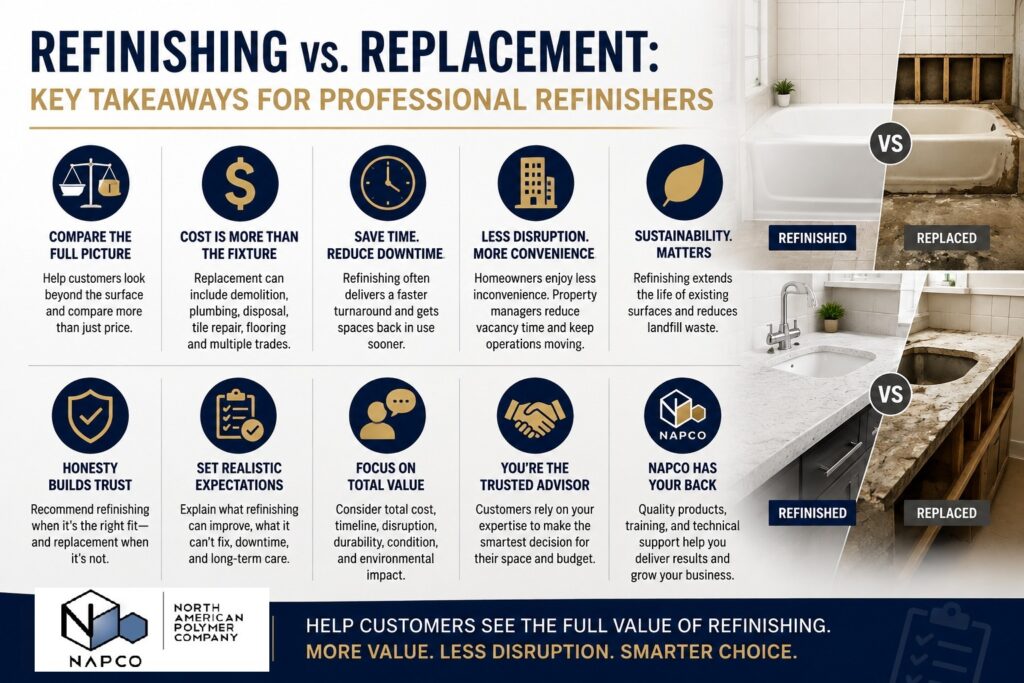
- ♦ Refinishing and replacement solve different problems. Refinishers should help customers compare the condition of the existing surface before recommending either option.
- ♦ Cost goes beyond the fixture itself. Replacement can involve demolition, plumbing, disposal, tile repair, flooring work, and multiple contractors.
- ♦ Refinishing can reduce project disruption. When the existing surface is structurally sound, refinishing often avoids the longer timelines associated with removal and replacement.
- ♦ Speed matters to both homeowners and commercial clients. Faster turnaround can mean less inconvenience at home and less downtime for apartments, hotels, and other properties.
- ♦ Refinishing can extend the useful life of existing surfaces. Tubs, tile, countertops, and surrounds do not always need to be discarded simply because they look worn or outdated.
- ♦ Sustainability can strengthen the value conversation. Refinishing helps reduce construction waste by restoring surfaces that still have useful life.
- ♦ Honest recommendations build trust. Experienced refinishers know when a surface is a good candidate for refinishing and when structural damage makes replacement the better choice.
- ♦ Customers need realistic expectations. Explain what refinishing can improve, what it cannot repair, expected downtime, and how maintenance affects long-term performance.
- ♦ Professional refinishers sell value, not just coatings. The strongest sales conversations address total cost, timeline, disruption, durability, surface condition, and sustainability.
- ♦ NAPCO supports professional refinishers with products, training, and technical guidance that help contractors deliver reliable results and confidently explain the value of refinishing.
The Cost Conversation
Replacement can sound simple at first. Remove the old fixture, install the new one, and move on. In reality, the cost of replacement often goes far beyond the fixture itself.
A tub replacement may involve demolition, plumbing adjustments, tile repair, flooring issues, disposal fees, and multiple trades. Countertop replacement may require measurement, fabrication, removal, installation, and possible disruption to cabinets, sinks, backsplashes, or surrounding surfaces.
Refinishing gives customers another option. When the existing surface is structurally sound, refinishing can deliver a clean, updated appearance without the added expense of tearing out materials that still function.
That is the value conversation customers need to hear. They aren’t just saving money on the surface. They may be avoiding the additional costs that come with demolition, coordination, and construction surprises.
The Timeline Conversation
Customers often think they’re comparing two finished results. What they may not realize is that they’re also comparing the process required to get there.
Replacement can mean ordering materials, waiting for availability, scheduling contractors, removing old surfaces, completing installation, and dealing with cleanup. For homeowners, that can mean days or weeks of inconvenience. For property managers, hotels, apartment communities, and commercial facilities, downtime can directly affect revenue and occupancy.
Refinishing offers a faster path in many situations. Instead of turning a bathroom or kitchen into a construction project, refinishing can frequently restore the surface and get the space back into use much sooner.
For customers, speed has value. A faster project means less disruption, fewer scheduling headaches, and a quicker return to normal use.
The Sustainability Conversation
Sustainability is another important part of the refinishing value story.
A functional tub, shower, tile wall, or countertop does not always need to be removed and sent to a landfill simply because the surface looks worn or outdated. If the underlying material is still solid, refinishing can extend its life and reduce unnecessary waste. That message resonates with many customers, especially when it’s presented practically.
Refinishing doesn’t only involve improving appearance. It’s also about using what is already there more responsibly.
For contractors, this can be an important differentiator. Customers may come in focused on price, but they often appreciate learning that refinishing can also be a more resource-conscious choice.
Knowing When Refinishing Is the Right Fit
Refinishing isn’t the right solution for every situation. If a fixture is severely damaged, structurally compromised, leaking, or beyond reasonable repair, replacement may be the better recommendation. Experienced refinishers build trust by being honest about that.
The stronger sales conversation begins when the contractor helps the customer understand the condition of the existing surface and the realistic outcome refinishing can provide. That means explaining what refinishing can improve, what it can’t fix, how long the surface should remain out of use, and how proper maintenance affects long-term performance.
Customers appreciate transparency. They want to know they are making a smart decision, not simply choosing the lowest-cost option.
Helping Customers See the Full Value
The best refinishers don't sell coatings. They help customers understand their options.
When a customer asks, Should I refinish this or replace it?, the answer should include more than price. It should account for the total project cost, the timeline, the disruption, the condition of the existing surface, and the environmental impact of removing materials that may still have useful life.
In many cases, refinishing provides the appearance, function, and durability the customer wants without the expense and disruption of replacement.
That is the value professional refinishers are uniquely positioned to explain.
📞 Ready to help customers see the full value of refinishing? Contact NAPCO today for the products, training, and technical support you need to deliver professional results, answer customer questions, and grow your refinishing business with every job.