
NAPCO Refinisher

Common Refinishing Mistakes and How Experienced Pros Avoid Them

Refinishing is one of the most visible services a contractor can provide.
Every customer sees and uses the finished surface daily, which means even small mistakes can lead to callbacks, warranty claims, negative reviews, and lost referrals. While many refinishing failures are blamed on products, the reality is that application practices, environmental conditions, and preparation play a major role in the final outcome.
Even experienced refinishers can fall into shortcut habits during busy periods.
The difference is that seasoned professionals develop systems that help them avoid costly mistakes before they happen.
This guide explores the most common refinishing mistakes and how experienced professionals avoid them to reduce callbacks, improve coating performance, and deliver consistent, high-quality results.
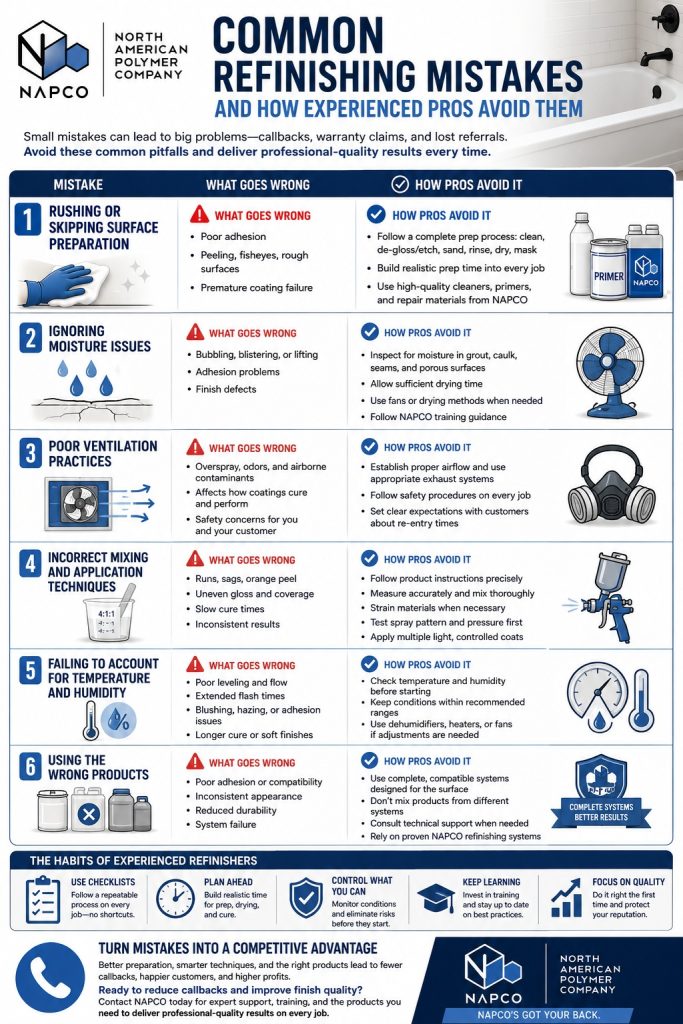
Rushing or Skipping Surface Preparation
Preparation remains one of the leading causes of coating failures.
Soap scum, body oils, silicone residue, hard water deposits, and other contaminants can interfere with adhesion if they aren't fully removed. Prep shortcuts may save time initially, but they can result in peeling, fisheyes, rough surfaces, and premature coating failure.
Experienced refinishers follow a repeatable process that includes cleaning, de-glossing or etching, sanding, rinsing, drying, and masking. They also build realistic preparation time into their schedules instead of trying to make up time later in the job.
NAPCO offers a wide range of refinishing products, including cleaners, primers, coatings, and repair materials that support proper preparation and long-term coating performance.
Ignoring Moisture Issues
Many coating problems begin long before spraying starts.
Residual moisture trapped in grout lines, caulk joints, seams, or porous surfaces can create adhesion issues, bubbling, blistering, or other finish defects. Bathrooms naturally present moisture challenges, making thorough drying a critical part of the refinishing process.
Experienced pros inspect surfaces carefully and allow sufficient drying time before applying coatings. If conditions require it, they use fans or other drying methods to reduce moisture-related risks before moving forward.
NAPCO's training videos provide application guidance that helps contractors identify and avoid common causes of coating failure.
Poor Ventilation Practices
Ventilation affects more than comfort. It impacts safety, finish quality, and customer satisfaction.
Inadequate airflow can allow overspray, odors, and airborne contaminants to remain in the work area longer than necessary. Poor ventilation may also affect how coatings cure and perform.
Professional refinishers approach ventilation the same way they approach surface preparation. They establish proper airflow, use appropriate exhaust systems, and follow recommended safety procedures on every job. They also communicate expectations to customers so everyone understands when the area can safely return to normal use.
Incorrect Mixing and Application Techniques
Even high-quality coatings can produce disappointing results if they aren't mixed or applied correctly.
Eyeballing ratios, rushing the mixing process, or making improper spray adjustments can lead to runs, sags, orange peel, uneven gloss, slow cure times, and inconsistent coverage.
Experienced contractors carefully follow product instructions, measure accurately, strain materials when necessary, and test spray patterns before beginning work. Multiple controlled passes generally produce better results than attempting to achieve full coverage with one heavy coat.
Following manufacturer recommendations helps create more predictable results and reduces the likelihood of costly rework.
Failing to Account for Temperature and Humidity
Environmental conditions influence nearly every stage of the refinishing process.
Rooms that are too cold, too hot, or excessively humid can affect flash times, leveling, curing, and final finish quality. Excess humidity can also contribute to moisture-related issues that impact coating performance.
Experienced refinishers check environmental conditions before beginning work and make adjustments when necessary. A small investment in monitoring temperature and humidity can prevent significant problems later.
Using the Wrong Products
Not all coatings are designed for every refinishing application.
Mixing products from different systems or selecting coatings that aren't intended for tubs, tile, or other specific surfaces can create inconsistencies in appearance, durability, and performance.
Seasoned professionals rely on proven systems that are designed to work together. They also consult technical support resources when encountering unusual substrates or challenging project conditions.
NAPCO offers complete refinishing systems that help contractors achieve reliable performance from preparation through final topcoat application.
Turn Mistakes Into a Competitive Advantage
Every refinisher encounters challenges during their career. What separates experienced professionals from everyone else is their commitment to improving processes and eliminating repeat mistakes.
Jobsite checklists, documented procedures, environmental monitoring, and ongoing training all help reduce callbacks and improve profitability. Small refinements in preparation, moisture control, ventilation, and application practices can produce significant improvements in long-term results.
📞 Ready to reduce callbacks and improve finish quality? Contact NAPCO today to review your refinishing process, get answers to technical questions, and learn how the right products, training, and support can help you avoid common mistakes, improve coating performance, and deliver professional-quality finishes on every job.