NAPCO Refinisher

The Difference Between Owning a Job and Running a Refinishing Business

Most refinishers start as technicians.
You learn how to prep properly, repair chips, spray a smooth finish, and deliver results clients love. The work is hands-on and detail-driven. Then the calendar fills up, the days get longer, and you realize something important: staying busy doesn’t always mean you’re building a business.
At some point, every refinisher faces a shift in thinking. The question changes from How do I finish today’s job? to How do I run a business that stays profitable and consistent?
That shift separates owning a job from running a refinishing business.
Thinking Beyond the Spray Day
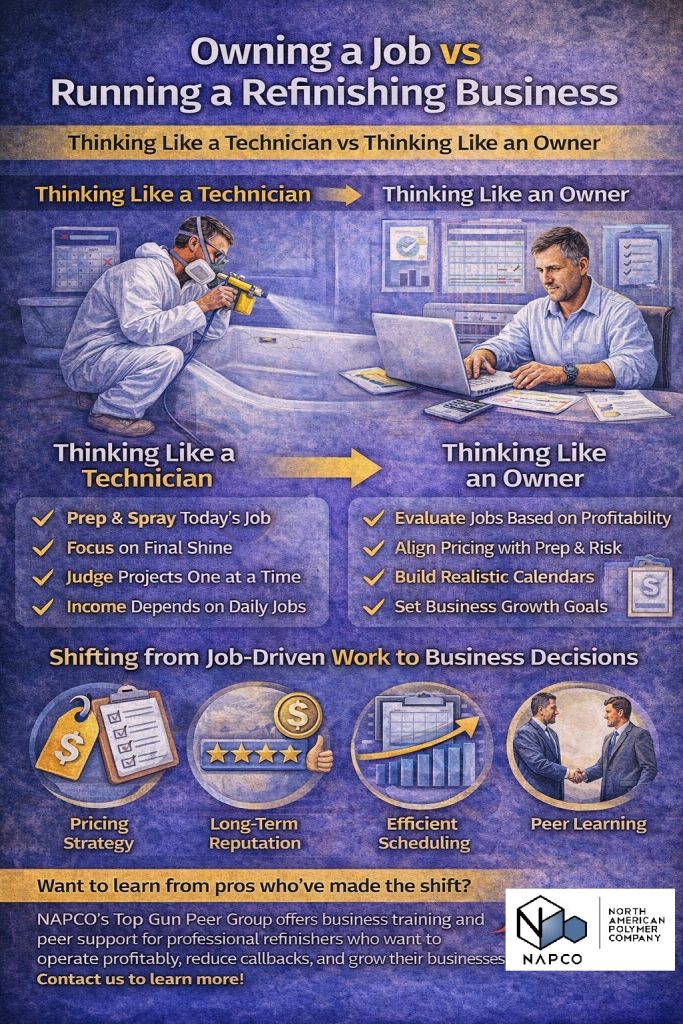
A technician’s focus is straightforward: prep; mask; spray; cure; and move on. Quality work is the goal.
An owner looks at the full lifecycle of the job. The decisions start earlier and carry further:
- ♦ Is the surface stable enough to coat?
- ♦ Is the price aligned with prep time and risk?
- ♦ Will this project create scheduling pressure later in the week?
Refinishing is full of small judgment calls that don’t show up in the final shine but directly affect profit and reputation.
Prep Work Drives Profitability
Prep is where time disappears.
Removing old coatings, correcting previous repairs, and dealing with unexpected conditions can quickly add hours.
The technician mindset pushes forward to finish whereas the owner mindset tracks how prep affects margins and adjusts pricing accordingly.
Strong businesses inspect carefully, communicate expectations early, and price based on real conditions rather than assumptions.
Repair Decisions That Protect Your Schedule
Daily repair choices highlight the difference between technician thinking and owner thinking.
A technician asks, “Can I make this look good?”
An owner asks, “Will this hold up, or will I be back here in six months?”
Choosing the right repair approach protects more than the finish. It protects your schedule. Callbacks steal time from new work and quietly reduce profitability.
Scheduling Like a Business Owner
Refinishing jobs rarely go exactly as planned. Dry times vary, unexpected repairs show up, and site conditions change.
Owners build breathing room into the schedule because one complicated job can throw off an entire week. A realistic calendar supports quality work and reduces pressure to rush prep.
The Work Clients Don’t See
Running a refinishing business includes work beyond spraying. Taking photos, following up with clients, tracking materials, and communicating clearly all influence future jobs.
Technicians finish the work. Owners treat each project as part of their long-term reputation.
Learning From Other Professionals
Many refinishers learn the craft first and the business side later. That’s why peer learning has become valuable in the industry.
NAPCO’s Top Gun Peer Group brings professional refinishers together for ongoing business training and real-world discussions about pricing, operations, and decision-making. The focus goes beyond techniques and helps owner-operators think more strategically about how they run their businesses.
Small Shifts That Change the Business
The transition from technician to owner comes from practical decisions:
- ♦ Pricing based on prep and risk
- ♦ Building realistic schedules
- ♦ Choosing repair methods that reduce callbacks
- ♦ Treating each project as part of long-term growth
These shifts feel small, but they change business trajectory.
The True Difference
Owning a job means your income depends on how many hours you personally work. Running a refinishing business means making decisions that protect margins, reduce rework, and create consistency.
If you’re ready to think more like an owner, NAPCO’s Top Gun Peer Group is designed for refinishers who want to sharpen both their technical judgment and business mindset alongside other professionals facing the same challenges.
FAQ: Running a Successful Tub & Tile Refinishing Business
What is the difference between owning a job and running a refinishing business?
Owning a job means your income depends entirely on the number of jobs you personally complete. Running a refinishing business involves making strategic decisions about pricing, scheduling, repair methods, and client communication so the business stays profitable and sustainable over time.
Why do many refinishers struggle when transitioning from technician to business owner?
Most refinishers begin by mastering the technical side of the trade. Skills like surface prep, spraying, and repairs are critical, but operating a profitable refinishing business also requires pricing strategy, scheduling management, and risk evaluation.
How does prep work affect refinishing profitability?
Prep work often determines the real time investment on a job. Removing old coatings, fixing previous repairs, and addressing unexpected surface conditions can significantly increase labor time. Business-minded refinishers inspect carefully and price projects based on real prep requirements.
Why are callbacks costly for refinishing businesses?
Callbacks reduce profitability because they take time away from new revenue-generating work. When repairs or coatings fail prematurely, refinishers must revisit previous jobs instead of focusing on new projects.
How should refinishers schedule jobs to avoid delays?
Experienced refinishing business owners build buffer time into their schedules. Unexpected repairs, longer prep times, and curing conditions can affect timelines. A realistic schedule helps maintain quality work and reduces pressure to rush the process.
What business skills help refinishers grow beyond working job-to-job?
Successful refinishing business owners focus on pricing strategy, project evaluation, customer communication, workflow planning, and long-term reputation building. These skills help create consistent income rather than relying only on daily job volume.
How can refinishing professionals learn the business side of the trade?
Many refinishers benefit from peer learning and industry training programs. Programs like NAPCO’s Top Gun Peer Group provide opportunities for refinishers to discuss pricing, scheduling, marketing, and operational decisions with other professionals in the industry.
Ready to Think Like a Business Owner?
If you’re serious about turning your refinishing work into a stronger, more profitable business, you don’t have to figure it out alone.
NAPCO’s Top Gun Peer Group connects professional refinishers from across the country to discuss real-world challenges like pricing, scheduling, repairs, and business growth. It’s a place to sharpen both your technical judgment and your business mindset alongside other professionals who understand the industry.
Join a community focused on building stronger refinishing businesses.
📞 Contact NAPCO today to learn more: 1-800-888-1081