
NAPCO Refinisher

Save More by Shipping Smarter: The Case for LTL and Bulk Orders

A refinishing business owner recently walked through his numbers and couldn’t figure out why strong jobs weren’t translating into stronger margins.
Materials were under control, labor was where he expected it to be, and marketing wasn’t out of line. Then we looked at shipping.
Order after order placed just to get through the week. One or two boxes at a time. Each one necessary in the moment, none of them questioned. That’s where the margin was slipping.
Shipping rarely shows up as a headline expense, yet it consistently pulls dollars out of the business without much attention.
In this post, we’ll look at how refinishers are saving 30–40% per shipment by adjusting how and how much they order.
Shipping Is Quietly Eating Into Margins
Many refinishing businesses fall into a pattern that feels practical but carries a hidden cost.
Materials run low, an order goes in, work continues, and a few days later the cycle repeats. It keeps jobs moving, but each shipment comes with a cost that’s higher than it appears at first glance.
Those costs tend to show up in ways that are easy to overlook:
- ♦ Frequent shipping charges across multiple small orders
- ♦ Higher per-order freight costs compared to bundled shipments
- ♦ A steady accumulation of expenses that rarely get reviewed
Individually, none of these feel significant. Taken together, they start to pull down margins in a way that’s hard to trace unless you’re looking for it.
👉 Want stronger margins without raising prices? NAPCO helps professional refinishers identify smarter ordering strategies that reduce freight costs and improve profitability. Contact us to review your current buying pattern.
What LTL Shipping Actually Means
LTL, or Less-Than-Truckload, is a freight method that allows multiple boxes to move together in a single shipment rather than being sent individually through parcel carriers.
Orders are typically palletized and shipped via a shared truck, which changes both the cost structure and the delivery experience.
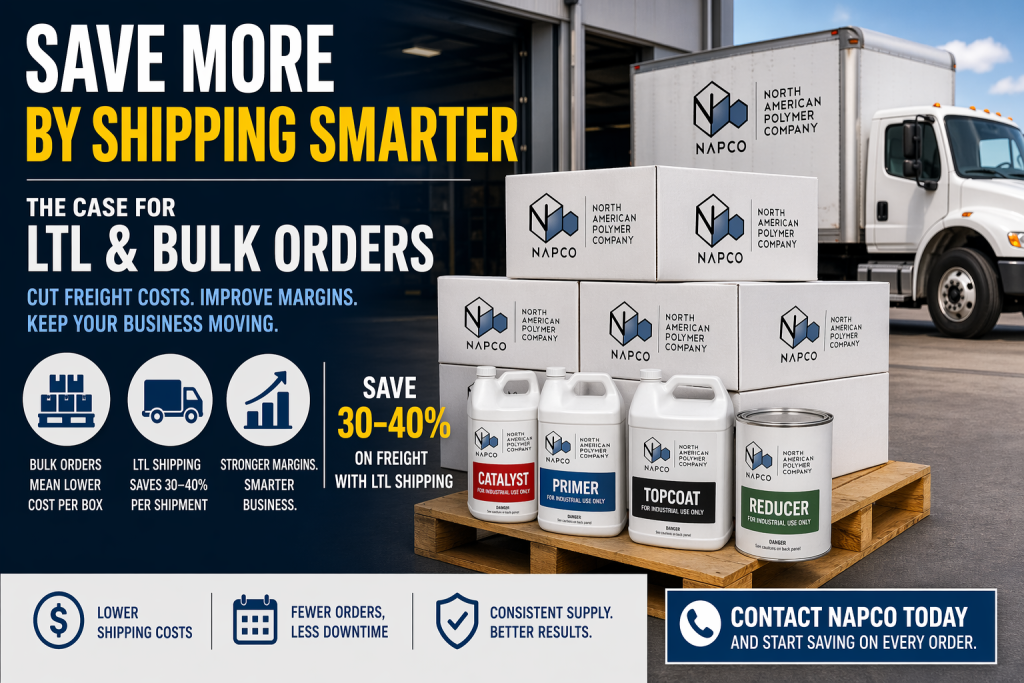
With NAPCO, orders that include six boxes or more can qualify for LTL shipping. That threshold can be reached through combinations such as:
- ♦ Six half-gallons of product
- ♦ A mix of primers, topcoats, and related materials
- ♦ Any order that reaches six total boxes
This approach remains accessible for small and mid-sized businesses that already have predictable product usage and can plan purchases accordingly.
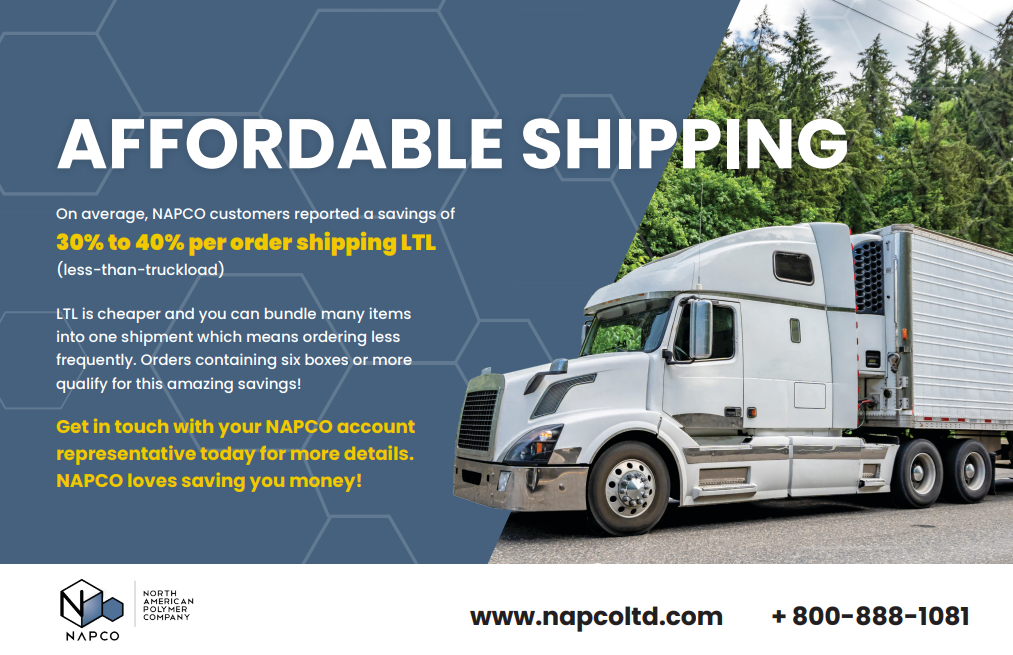
The Payoff: 30–40% Freight Savings
Refinishers using LTL through NAPCO have reported average savings of 30–40% per shipment
Those savings come from restructuring orders rather than reducing quality or cutting back on materials. When shipments are bundled, the economics start to work in your favor:
- ♦ More products move in a single shipment
- ♦ The cost per box decreases
- ♦ The number of freight charges drops
That combination leads to a lower overall cost of doing business, not just a cheaper shipment here and there.
Stock vs. Order-As-Needed
Ordering only what’s needed for the immediate job can feel disciplined, especially for owners who prefer to keep inventory lean. In practice, that approach often leads to frequent shipments and higher total freight spend.
A more deliberate ordering strategy starts with understanding which products are used consistently across projects. In most refinishing businesses, that includes:
- ♦ Primers that show up in nearly every job
- ♦ Topcoats that drive the finished result
- ♦ Core materials that support the system
Planning purchases around those items allows for fewer, larger orders that meet LTL thresholds.
Keeping a modest level of inventory on hand leads to practical advantages:
- ♦ Lower cost per unit shipped
- ♦ Fewer last-minute orders
- ♦ More predictable scheduling and workflow
Instead of reacting to shortages, the business operates with a level of foresight that supports both execution and margins.
👉 Professional refinishers who plan inventory strategically often gain an edge in scheduling, job readiness, and cost control. NAPCO can help you identify the right stocking levels for your business.
How the Savings Add Up
The difference between parcel shipping and LTL becomes clear when you look at ordering patterns rather than individual transactions.
With smaller, frequent shipments, each order carries its own freight cost. With larger, consolidated orders, that cost is spread across more products and fewer deliveries.
The shift comes down to this:
- ♦ Fewer shipments overall
- ♦ Lower cost per box
- ♦ Reduced total freight spend across the month or quarter
Even without exact numbers, the logic holds once you step back and look at the full pattern.
Is This the Right Approach for Your Business?
This adjustment doesn’t require a major operational change. It starts with understanding how you’re currently ordering and where small changes can create leverage.
A few questions help frame the decision:
- ♦ How often are small, last-minute orders being placed each month?
- ♦ Which products are used consistently across most jobs?
- ♦ Is there space to hold a small amount of additional inventory?
From there, a simple approach works well:
- ♦ Identify your top 5 to 10 staple products
- ♦ Estimate how much you use in a typical month
- ♦ Combine orders where possible to reach the six-box threshold
Many businesses find they’re closer to qualifying than they initially thought.
👉 If your refinishing business uses staple products every month, you may already be close to qualifying for LTL savings. Ask NAPCO how to structure your next order more efficiently.
Addressing Common Concerns
There are a few common hesitations that come up with bulk ordering and LTL shipping.
“I don’t want product sitting on a shelf.”
Holding key materials is less about excess and more about stability. It reduces disruptions, supports scheduling, and limits the need for urgent shipments.
“I’m not sure I can afford a larger order.”
Looking at cash flow across a quarter provides a more accurate view. Reduced shipping frequency and lower freight costs can offset the larger upfront purchase.
“LTL sounds complicated.”
From the customer side, the process is straightforward:
- ♦ Meet the minimum order threshold
- ♦ Confirm delivery details
- ♦ Receive the full shipment together, typically within a few business days, with tracking included
The Next Step
If your business is placing multiple small orders each month, there’s a strong chance freight costs are higher than they need to be.
Start with a simple step. Talk to your NAPCO representative and ask whether your current ordering pattern could qualify for LTL savings. Then review your last few months of orders and identify where multiple small shipments could have been combined.
For owners focused on tightening operations and improving margins, this is a practical adjustment that delivers measurable imp♦act.
📞 Ready to save more on every shipment? Contact NAPCO today to discuss LTL options, bulk ordering strategies, and how to reduce freight costs without sacrificing the products your refinishing business depends on.