
NAPCO Refinisher

Protecting Your Refinishing Products During Winter Weather

Winter brings more than cold mornings and icy windshields. For refinishers, it introduces a unique set of challenges that can quietly compromise the performance of the products you rely on every day. Whether you're preparing for a busy stretch of bathroom projects or tackling kitchen surfaces in tighter indoor spaces, winter safety starts long before you pull the trigger on your spray gun.
Cold temperatures, dry air, and limited ventilation can affect everything from product consistency to equipment reliability. With the right steps, you can maintain both product integrity and job-site safety all winter long.
1. Store Products Above Freezing at All Times
Many refinishing products are susceptible to freezing, and once they freeze, they may no longer be usable.
When temperatures drop near or below freezing, the resin in coatings can cure prematurely or become damaged, leading to thickening, separation, or complete failure.
Products stored in unheated garages, sheds, trailers, or vehicles are especially vulnerable. If a product freezes even once, its performance on the job is no longer guaranteed. Beyond wasted product, cold exposure can also cause permanent damage to spray equipment, including your gun.
Keep all refinishing products, including primers, epoxies, topcoats, and waterborne coatings, indoors in a temperature-controlled space. This protects their chemistry and reduces the risk of costly rework later.
2. Warm Products Properly Before Use
If your products have been sitting in a cold environment, allow them to gradually warm to room temperature before application.
Shaking or spraying a cold coating leads to poor atomization, uneven coverage, and surface defects.
Avoid placing products directly on heaters or using high heat to bring them up to temperature. Instead, give them adequate time indoors to stabilize. Stable product temperature leads to smoother application and better adhesion.
3. Ventilate Indoor Workspaces Safely
Winter weather often means closed windows and running heaters, but proper ventilation is still non-negotiable when working with professional refinishing coatings.
Conventional heaters and inadequate airflow can concentrate fumes and affect curing conditions.
When possible, use a cross-ventilation setup. Window fans, exhaust systems, or controlled airflow solutions help maintain safety while reducing odor buildup. Always avoid heating systems with open flames near solvents or flammable materials.
4. Protect Against Moisture and Temperature Fluctuations
Winter humidity levels fluctuate quickly, especially in bathrooms.
Cold air entering a warm home can lead to condensation, which interferes with adhesion and curing.
Before spraying, confirm that the surface is fully dry and the room’s temperature is stable. Sudden changes can cause inconsistencies in finish quality. Space heaters can help regulate temperature, but keep them at a safe distance from materials and equipment.
5. Inspect Any Product Suspected of Cold Exposure
If you think a coating may have been exposed to freezing temperatures, check its consistency before use.
Signs of freeze damage include clumping, graininess, separation, or unusual texture. If the product looks or feels compromised, do not use it.
Water-based kitchen and bathroom refinishing products, like NAPCO’s Kitchen Renew, Flint-Stone™ and Piranha Prep, are especially susceptible to freeze-thaw damage. Freezing can permanently alter the formula, making it unfit for professional results.
6. Keep Your Equipment Winter-Ready
Just like your coatings, your spray gun and hoses are vulnerable to cold conditions.
Thickened material can clog components, strain moving parts, and degrade seals. Let equipment warm indoors, clean it thoroughly after every use, and avoid leaving your setup in vehicles overnight.
A well-maintained gun performs consistently through the winter months and reduces downtime between jobs.
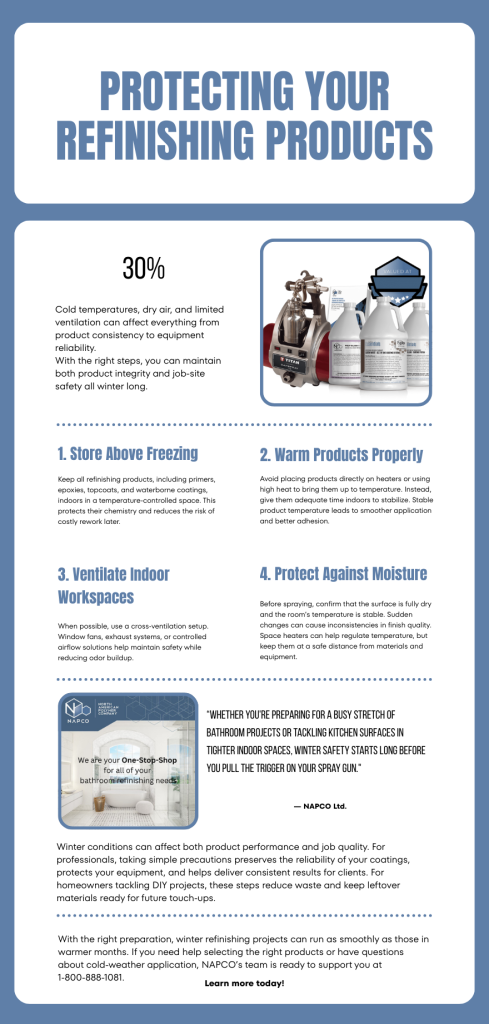
Winter conditions can affect both product performance and job quality. For professionals, taking simple precautions preserves the reliability of your coatings, protects your equipment, and helps deliver consistent results for clients. For homeowners tackling DIY projects, these steps reduce waste and keep leftover materials ready for future touch-ups.
With the right preparation, winter refinishing projects can run as smoothly as those in warmer months. If you need help selecting the right products or have questions about cold-weather application, NAPCO’s team is ready to support you at 1-800-888-1081.